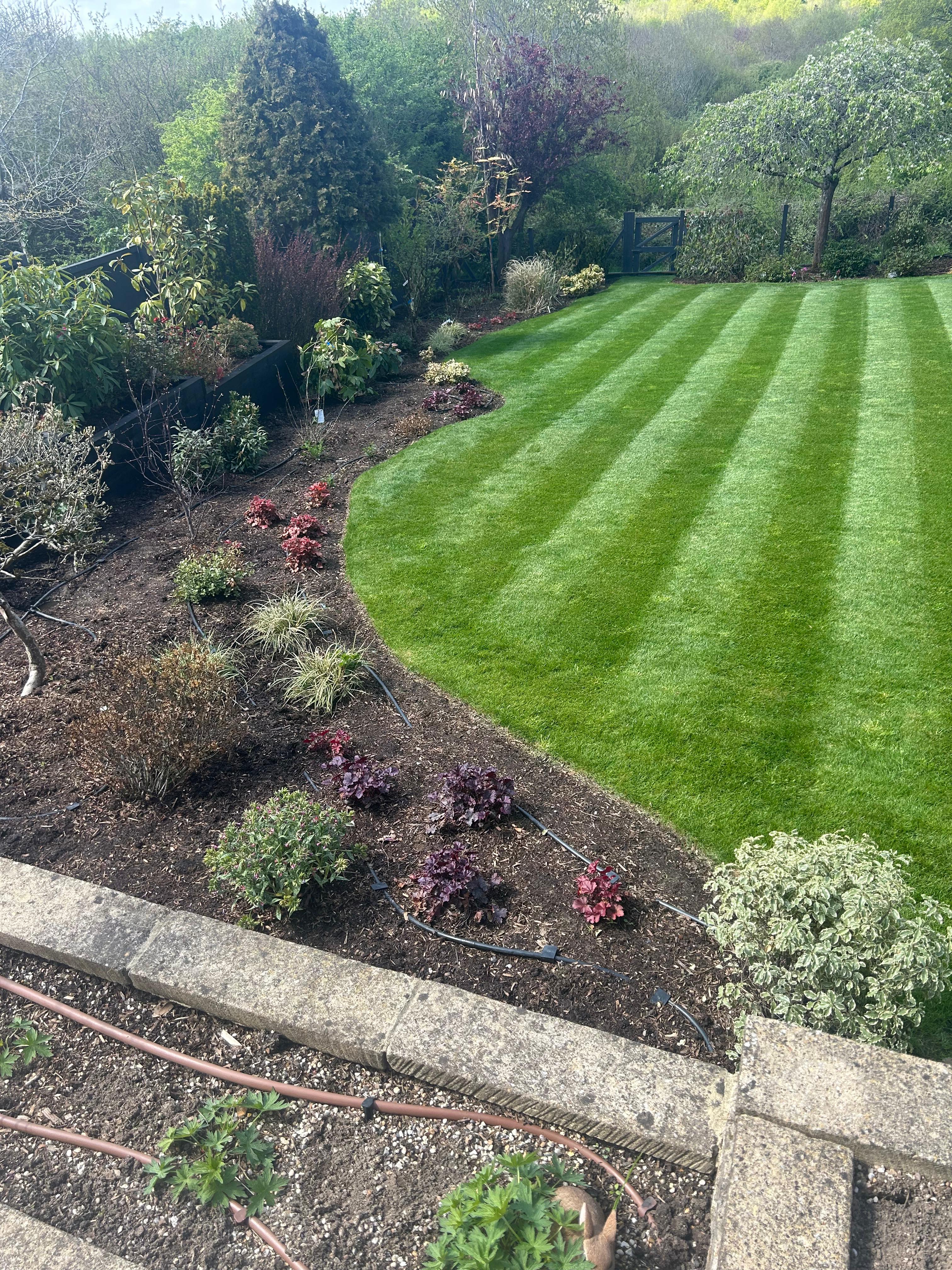
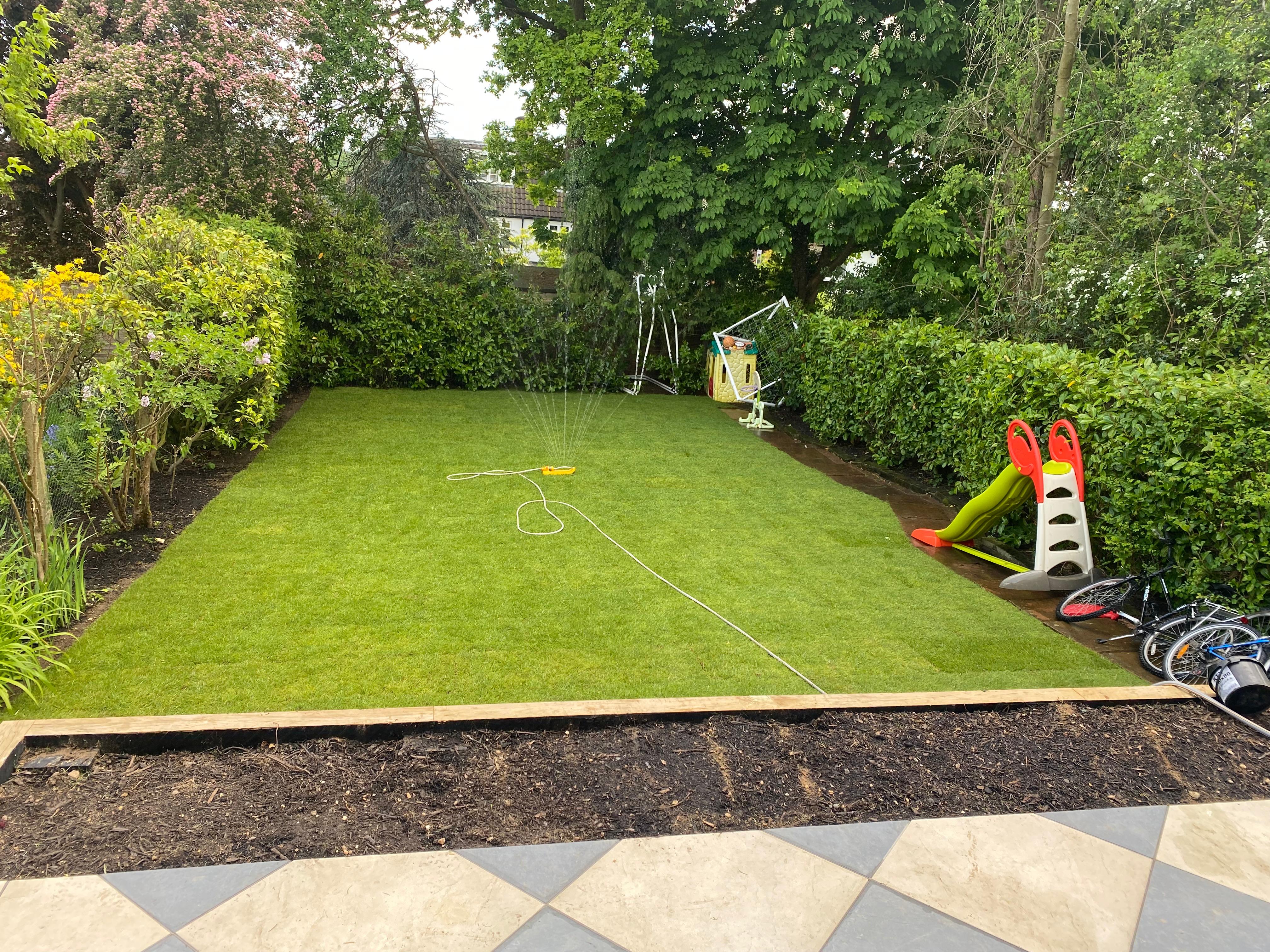
A good lawn is mostly about consistency. The North London climate is forgiving in spring and autumn, brutal during summer dry spells, and persistently mossy in shaded back gardens. With a sensible rhythm and a few targeted interventions through the year, even an average lawn can look reliably good. This guide is the version of the conversation we usually have with clients on the first visit.
Turf vs Seed
If you are starting again, the choice is between rolled turf for an instant lawn and seeding for a slower, cheaper but often longer-term result.
- Turf gives an immediate, mowable lawn within a few weeks. The cost is the laying labour and the turf itself, plus careful watering for the first month. It is the right answer when you want a finished garden in time for a summer or a sale.
- Seed is significantly cheaper and arguably gives a deeper-rooted lawn long-term, but it takes a season to establish and is unforgiving if the seedlings dry out. Best laid in spring or early autumn.
For most North London town gardens, where the lawn area is moderate and visibility matters, turf is the more popular call.
A Sensible Mowing Rhythm
The single biggest mistake we see is cutting the lawn too short, especially in mid-summer. Short grass dries out fast, the roots stay shallow, and any moss or weed gets a head start.
- Spring (Mar–May): Once a week, gradually dropping the cut height as the grass thickens up.
- Summer (Jun–Aug): Once a week, but raise the blade in dry spells. Long grass shades its own roots and recovers from drought far better.
- Autumn (Sep–Oct): Once a week, dropping cut height again before winter.
- Winter (Nov–Feb): Mow only on a dry mild day, with the blade up , this stops the lawn looking unkempt without damaging it.
Feeding and Watering
A North London lawn really only needs two feeds a year: a high-nitrogen spring feed to push fresh growth, and an autumn feed (low nitrogen, higher potassium) to harden the lawn off before winter.
On watering: deep occasional watering beats little-and-often every time. A good soak once a week during a dry spell will train roots downwards. Light daily sprinkles train them upwards, which is exactly what you do not want.
Want Us to Look After Your Lawn?
Message Clement on WhatsApp or call 07958 330070 for a free quote on regular lawn care across Barnet, Finchley and North London.
Get a Free QuoteMoss, Weeds and Bare Patches
Moss is almost always a sign of one or more of: too much shade, compacted soil, poor drainage, or a too-acidic surface. The fix sequence we usually run through:
- Scarify: Rake out the dead moss thatch in early spring or autumn. This alone makes a huge visual difference.
- Aerate: Spike the lawn so air, water and nutrients reach the roots. On compacted lawns this is the single most useful intervention.
- Top dress: A thin layer of sandy loam after aerating opens up the surface and helps drainage.
- Overseed: Drop new seed onto the bare patches and water it in.
For weeds, a selective lawn weedkiller used carefully in late spring will deal with most broadleaf invaders without harming the grass itself.
Renovate or Replace?
A useful rule of thumb: if more than about 40% of the lawn is moss, weed or bare ground, it is usually faster and cheaper to lift it and re-turf than to fight uphill for two seasons. If less than 40%, the renovation route (scarify, aerate, top dress, overseed, feed) is normally the right call.
A Note on Artificial Turf
Artificial turf has a place. For shaded courtyards where a real lawn would never thrive, for households that want a usable green space without ongoing maintenance, or for play areas where mud is a constant battle, modern artificial turf can be a sensible choice. We install it as one of the lawn options, but we will be honest with you about whether the conditions you have actually warrant going that route or not.
Frequently Asked Questions
For turf: spring or early autumn are ideal because rainfall and temperatures help establishment, but turf can be laid almost year-round with proper watering. For seed: late spring or early autumn only , anything outside that window is a gamble.
Turf typically takes about three weeks before light foot traffic, and another two to three weeks before regular use. Seeded lawns need around eight to twelve weeks before they can take normal wear.
If you want a lawn that looks consistently good, yes. Two feeds a year (spring and autumn) make a noticeable difference to colour, density and how well the lawn shrugs off summer stress.
Raise the cut height in dry spells, water deeply once a week rather than little-and-often, and avoid feeding during a drought. Brown summer grass usually greens back up within a fortnight of decent rain , it looks worse than it is.
Heavily used dog routes will always thin out. The realistic options are reseeding the worn spots regularly, accepting it as a feature, or putting in a hard path along the run the dog actually uses.
Yes. Many of our clients book us in for a fortnightly or monthly visit through the growing season, including mowing, edging, feeding at the right times of year and the seasonal scarify-and-aerate. Get in touch and we will quote based on your lawn size and visit frequency.